
Implementing a B2B sales system in a technology and service company
SalesMachine is a proprietary B2B sales system created by Łukasz Zjawiński at TechMine for B2B technology and service companies. It consists of five pillars, Strategy, Process, Communication, Tools and Measurement, implemented in that order in a program lasting 6 to 12 months. The goal of the system is to move a company from intuitive selling to sales that work without the owner’s daily involvement.
Implementing this system in a company is not a CRM rollout or a B2B e-commerce platform. Each pillar answers a different question: who you sell to and what, how the process runs, how you communicate, which tools you use and how you know it is working.
Does any of this sound familiar?
If so, the problem is usually not a lack of effort or competence, but the lack of a system that turns activity into a predictable result.


SalesMachine helps owners of technology and service companies build predictable B2B sales





Why a B2B company needs a sales system
SalesMachine is a system for building predictable, measurable and scalable B2B sales, developed by Łukasz Zjawiński at TechMine. It helps owners of B2B technology and service companies move from sales based on intuition to sales based on a process, tools and repeatable communication.
Most B2B companies sell intuitively: results depend on the owner, referrals and luck. SalesMachine turns that into a system: sales strategy, sales process, tools, communication based on the Value Triangle and measurement together form a predictable sales mechanism that can be measured, optimized and delegated.
Full definition of the SalesMachine methodology : the pillars, what the system is not, and how it compares with well-known sales methodologies.

How the sales system implementation works
We have been doing this in technology and service companies since 2018, in the SalesMachine program, which lasts 6 to 12 months.
The implementation runs as dedicated advisory sessions. In each of them we discuss, develop, practise and adapt the next element of the system to the context of your company: on your real clients, not on textbook examples.
If you are looking for a broader description of how we work together, see B2B sales consulting.
Diagnosis and value proposition
We start with what your company really sells and to whom. We define the unique value you deliver and organize it so that you speak to clients in a way that resonates. This is the foundation the rest of the system rests on.
Market segmentation and persona profiling
We decide which clients you want to reach and why those in particular. We define segmentation criteria and build specific company lists along with a detailed psychological model of the decision makers.
Prospecting and outbound communication
We design how to reach the selected segments: communication channels, sequences, communication frameworks and specific content. This stage makes sales independent of referrals and networking.
Needs discovery and the sales conversation
You learn to lead the conversation in a way that uncovers the real needs and motivations of the other side. You get to know a communication framework based on the Value Triangle and practise it on your real conversations.
Proposal, objections and closing
We build the structure of demos and proposals that justify higher prices, and create a map for handling objections. This stage most often translates into a higher average order value and higher profits.
Measurement, optimization and delegation
We turn the process into numbers: you know which stage works and where improvement is still needed. The whole thing is documented so it can be handed over to the team.
Five elements we implement
We develop each element, fill it with content, implement it in practice and document it so it can be handed over to the team. Below is what specifically gets built in the company.
1. Sales strategy
We define who the company targets with its offer, what value it delivers and what the concept for market expansion will be. This is the conceptual part of the implementation: every subsequent element builds on its assumptions.
2. Sales process
We turn individual actions into a repeatable path from first contact to a signed contract, with clear criteria for moving between stages.
3. Value communication
We fill each stage of the process with specific content. This is most often the element that decides whether the client wants to talk at all and move further along the sales process.
4. Sales support tools
We choose tools last and to fit the process we have developed, never the other way round. A tool implemented before the process serves the chaos instead of removing it.
5. Measuring sales
We turn the process into numbers. Only then can you see which stage works and which one falters, and improve the system deliberately instead of guessing.
SalesMachine vs CRM, B2B platform, sales training and sales outsourcing
Five different things that often get similar names in conversations. Below are the differences, so it is clear what we are talking about and what we do not promise. On a narrow screen, scroll the table sideways.
| Sales system implementation | CRM implementation | B2B sales platform | Sales training | Sales outsourcing | |
|---|---|---|---|---|---|
| Subject of the work | Sales strategy and growth direction, process, communication, tools and measurement | Software configuration and data migration | An online store and order handling for existing clients | Passing knowledge and techniques to the team in the form of classes | Handing client acquisition over to an external company |
| Who does the work | The owner and the team, guided by a consultant | An integrator or a software house | A software house | A trainer, usually in a workshop or course format | An external agency or a contract salesperson |
| What stays in the company | A documented process, communication and metrics, ready to delegate | A configured system and organized data | A working order channel | The participants’ knowledge and the class materials | Results and contacts, for as long as the contract lasts |
| When it makes sense | When sales depend on the owner, referrals and luck | When a process already exists and needs a tool to run it | When clients place repeat orders | When the process works but a specific person lacks skills | When a process exists and volume needs to grow |
| What it will not solve | It will not replace a product nobody wants | It will not create a process the company does not have | It will not win new clients | It will not change what happens after the classes end | It will not build know-how inside the company |
What the SalesMachine system makes possible
This is the list of results business owners report after implementing SalesMachine.


Measurable effects of implementing SalesMachine
Specific results achieved by business owners after implementing the SalesMachine sales system.
A fourfold increase in profit with a 63% increase in revenue within a year.
A 55% increase in the average service price within four months.
Twice as many projects and clients won within a year.
Owners of B2B companies who went from intuition to a system
SalesMachine is a comprehensive program that lets you start sales activities effectively and, over time, make them repeatable. It focuses on the practical side: what has to happen and how, so that you really win new clients and sell at higher prices.
I warmly recommend it to every entrepreneur who already realizes that the lack of good sales is the main barrier to their company’s growth.

Łukasz helped us a great deal in discovering and clearly naming the unique values of our company and in organizing our sales process. He quickly understood our needs, and the solutions he proposed and implemented made a real difference. We are very happy with the cooperation.

The knowledge I receive as part of SalesMachine has a very positive impact on the growth of my company and, above all, on my approach to sales and business. Łukasz has vast experience working with software houses, which makes his perspective and suggestions invaluable to me.

For a long time I needlessly kept my distance from sales. I thought that “a good product sells itself”, and that is how it went in my case, but not in a predictable and repeatable way.
The SalesMachine program introduced me to the world of organized, deliberate selling, and what I learned helped me not only win new contracts, but also communicate consciously with people, both in business and in private life.

While building my sales system with SalesMachine, I learned many specific methods, tools and communication techniques. It allowed me to change the way I sell: from organic and mostly referral-based to more organized and more effective.
A side effect of the consulting was also a significant increase in the average order size and higher margins. I recommend it to anyone who is serious about growing their own company.

When we started working with Łukasz, we considered ourselves experienced entrepreneurs. That view changed quickly.
We realized the scale of our gaps and bad practices, and the amount of work ahead of us. It was an overwhelming experience. Through our joint work, however, we managed to set specific goals, and achieving them completely changed our reality.

TechMine is an interesting option for entrepreneurs who value an informal atmosphere and a small-group setting. It gives you the chance to grow on your own terms, and the knowledge comes straight from practitioners.
I recommend TechMine to every business owner who is thinking about growth.

Łukasz Zjawiński, entrepreneur and advisor to owners of B2B companies
Entrepreneur, business advisor and B2B sales strategist. Head of Consulting at TechMine. Creator of the SalesMachine sales system. He has built and runs technology companies himself, including a software house, so he understands this business from the inside. In the IT industry for more than 19 years.
He works with the business owner one on one, because the owner is the key to a systemic change in sales. He also hosts the podcast Droga Przedsiębiorcy (in Polish) on building a sales system and growing companies.
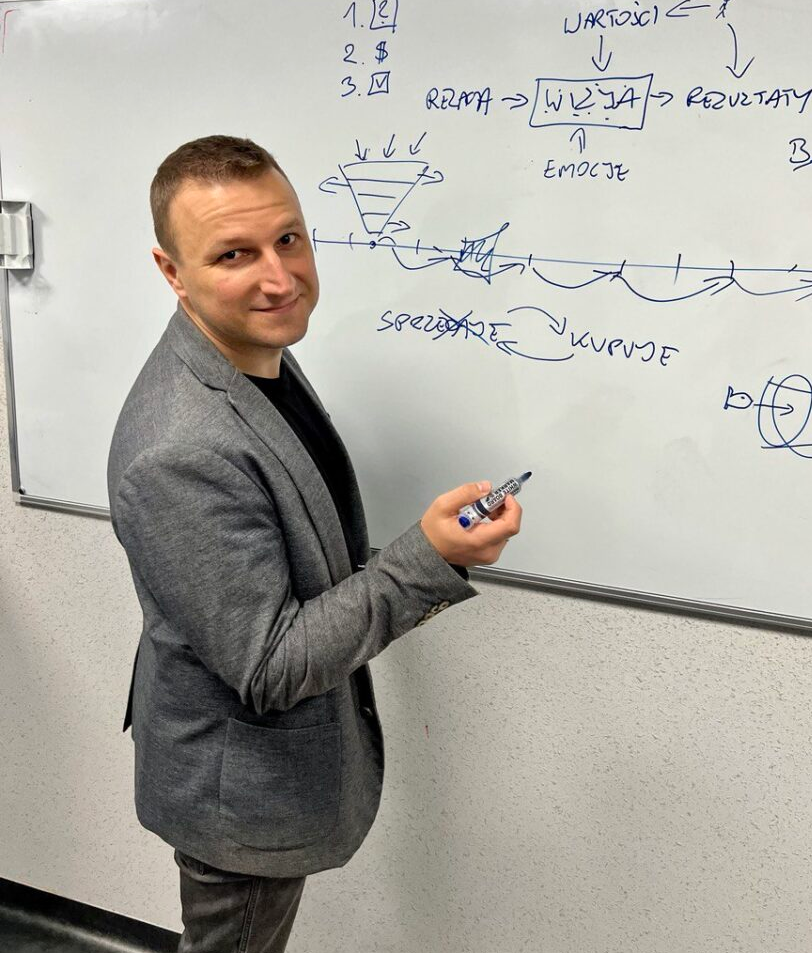
Facts about the SalesMachine sales system implementation
Who we accept for a sales system implementation
We work only with owners of companies whose success we believe in. We support entrepreneurs with the potential to build a profitable, scalable organization, not necessarily the biggest one.
We are not always able to take on a new company, but we are happy to learn about your situation. Even if we do not start working together, we will try to give you valuable feedback for growing your sales.
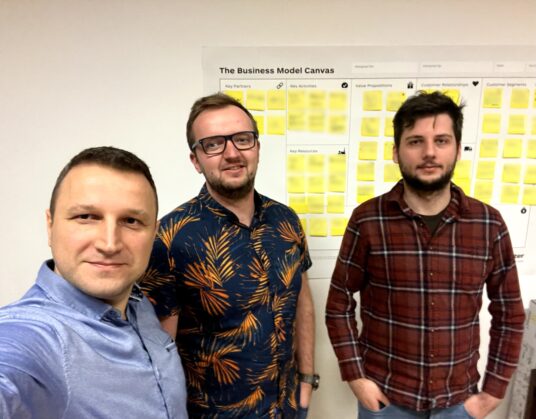
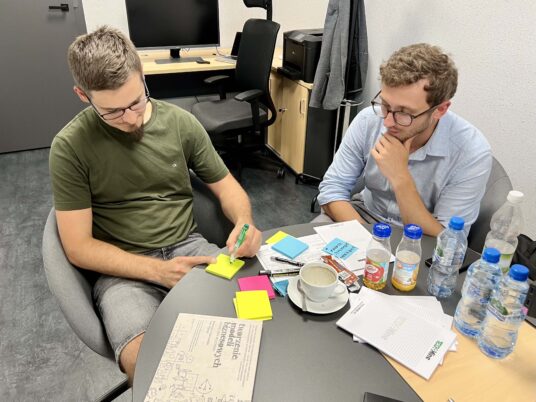
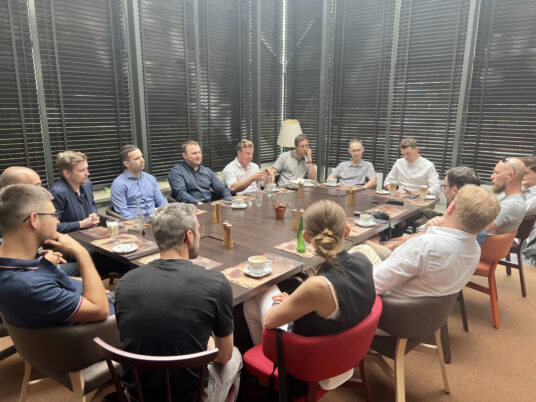
Which companies SalesMachine makes sense for, and which it does not
We would rather say this before the consultation than after three months of working together. If you recognize yourself on the right-hand side, write to us anyway: we will point you to what to look for instead of us.
It makes sense when
It does not make sense when
Frequently asked questions about implementing a sales system
Yes, but the CRM is one of many elements among the tools we use to support sales, not the starting point. First we design the sales process, the criteria for moving between stages and the way of measuring, and only then do we choose the tool to run it.
Implementing a CRM without a previously defined process gives you an empty pipeline with nicely named stages. If the company already has a CRM, we configure it to fit the developed process instead of replacing it with a new one.
SalesMachine is the name of the system and the program in which we run the implementation. A sales system implementation is the name for what happens in the company: we design and launch the strategy, the sales process, value-based communication, sales support tools and measurement of results at every stage.
In short: SalesMachine is the method, and the implementation is the work done with that method in a specific company. You will find the full definition of the methodology on the page what SalesMachine is.
SalesMachine consists of five pillars implemented in this order: Strategy (who you sell to and what), Process (how it runs step by step), Communication (how you reach people and what you say), Tools (what you work with every day) and Measurement (how we know it is working).
The order is not accidental: a tool chosen before the process serves the mess, and communication without a strategy reaches random recipients.
The system was developed by Łukasz Zjawiński, an entrepreneur, business advisor and B2B sales strategist, Head of Consulting at TechMine. He has run and built technology companies himself, including a software house, and has been in the IT industry for more than 19 years.
The method grew out of hands-on implementations in technology and service companies, not from translating corporate training to smaller firms. You will find a full description of the methodology on the page what SalesMachine is.
The implementation takes 6 to 12 months, depending on the intensity of the sessions and the specifics of the company. That is the time needed to absorb the methodology, build a sales process tailored to your company and implement it in practice so that it is ready to be delegated. Then we move into the stage of managing and scaling sales.
A documented sales system stays: segmentation and value proposition, a map of stages with criteria for moving between them, a needs discovery script, an extensive sales playbook for salespeople, prospecting sequences, a configured CRM and a set of metrics along with a rhythm for reviewing them.
All of it in a form that can be handed over to a new person on the team. That is the condition for delegating sales: without documentation, the know-how stays in the owner’s head.
On two levels. Operationally: conversion between pipeline stages, the number and quality of conversations, average order value, length of the sales cycle. In business terms: revenue, margin and profit in the period after the implementation compared with the period before it.
We establish starting metrics as reference points whenever possible. In most companies operating at the level of intuitive selling, many of the numbers do not exist yet, and we derive them together.
No. We run the implementation with the owner, because the owner usually knows the clients and the product best and ultimately decides the direction of the company.
A salesperson is often the natural next step. The developed process and documentation exist precisely so that one can be onboarded faster and cheaper than by trial and error.
Yes, that is the most common situation. Most of the companies we work with sell through the owner and referrals, without a dedicated sales department. The lack of a department is not an obstacle; it is the reason the implementation makes sense.
We have successfully run the implementation in companies with annual revenue from PLN 500 thousand to more than PLN 600 million. If one client spends at least several tens of thousands of PLN with you per year, the implementation will bring measurable results.
What matters is not the size of the company, but whether sales happen between people and whether you want to organize them into a repeatable system.
That is the most common real barrier, not a lack of will. The sessions are spread out over time precisely so they can be reconciled with running the company, and the work between them concerns things that have to be done anyway: conversations with clients, proposals and follow-ups.
If the owner is not able to devote time to this regularly, it is better not to start. An implementation without subsequent execution ends in greater awareness and skills, but with no impact on the company’s results.
Yes. A sales system works wherever sales happen between people, the offer is complex and hard to explain, and the purchase decision is made over a longer cycle.
Among the companies we have worked with are marketing agencies as well as service and manufacturing companies outside the technology industry. We have the most experience with technology companies, and that is where the method is best proven.
We run the implementation online (Zoom) as dedicated advisory sessions spread out over time. In each session we discuss, develop, practise and adapt the next elements of the sales system to the context of your company.
You work with a dedicated consultant who guides you through the whole process: from the value proposition, through prospecting, to closing and preparing for delegation.
Most sales and communication techniques work in any commercial relationship, but the implementation itself is designed for B2B sales. If your company sells both B2B and B2C, the benefits will carry over to both sides, while the process and tools are built with the specifics of B2B in mind.
Intuitive selling has a ceiling. Time for a system.
You know your company has more sales potential than it is currently realizing. Results depend on you, on referrals, on luck, but not on a system. That is normal at this stage, and it can be changed.
The lack of a sales system is the most common growth barrier in technology and service companies. SalesMachine gives you a repeatable client acquisition process that you can measure, optimize and delegate. Check whether we are a fit: let’s talk, no commitment.