Knowledge

Negotiations in business: what entrepreneurs talk about

negocjacje w biznesie - relacja ze spotkania TechMine Coffee

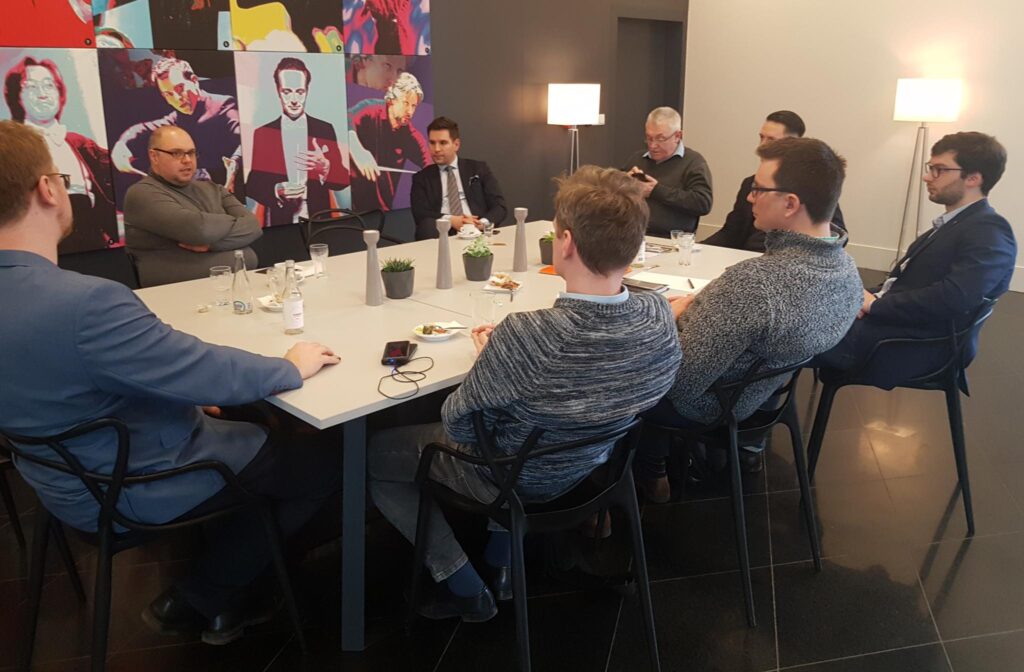
We made negotiations in business the topic of the second March TechMine Coffee. The participants shared their experiences on the effectiveness of various approaches and analyzed specific situations they had encountered in business practice. Examples of negotiating and concluding contracts with Finns, Belarusians, French or Germans were also raised. Differences in the approach to business, trust and understanding the partner’s needs were pointed out. We also discussed various negotiation techniques, both the better-known ones and those developed in the business practice of the meeting’s participants.

Negotiation is more psychology than business. We often meet readers of Schopenhauer or Cialdini who, however, forget about the purpose of negotiations, what is really important for the interests of the parties and what the other side of the negotiations considers valuable. While Cialdini, in describing the principles of social influence , did a highly useful job, Eristics may build the illusory impression that with unethical plays we can achieve the intended goals of negotiations. In practice each of us feels that something is wrong and will sooner be put off by the opponent than succumb to their manipulations. The possibility of reaching an agreement depends on the ability to conduct conversations. During the negotiation of an agreement, you should focus on gathering information from the negotiation partners so that the terms of the negotiated position are in the WIN WIN spirit; it is definitely better to refrain from manipulation and learn to actively listen to what the opponent is saying. Of Cialdini’s principles, those of fundamental importance in negotiations are the rule of reciprocity (a partner who has received something from us feels obliged to gratitude) and the rule of commitment and consistency (I have become involved in your action, so I will continue to participate until we find a solution).

Regardless of manipulation techniques or negotiation talents, the basis of negotiations must be excellent knowledge of the market, the competition and the product or service we offer. We can mention here the concept of BATNA (Best Alternative To a Negotiated Agreement), which is worth keeping in mind when pursuing the goal of negotiations. Unfortunately, negotiators still too often approach the problem on the basis of who will beat, or even cheat, whom. The conviction is not widespread that in the long run negotiating in a win-win spirit, i.e. bringing both sides optimal results, is more effective and more profitable for business.

In negotiations the room for maneuver is important; one of the discussants expressed it with the words: if you cannot walk away from the table, do not sit down at it. However trained, cultured and well-intentioned we ourselves may be, it happens that we sit down at the table with someone who negotiates brutally, does not listen to what we have to say, interrupts and shows us disregard. One should not get into arguments then; nerves must be kept in check, but under no circumstances should one give in to such practices, even for the sake of peace. Every negotiation should be conducted as part of possible future business and the communication process with the negotiating partner. Concessions made in such a situation become a point of reference for them during subsequent meetings.

Clients often ask their first question about a discount, which is in essence a price reduction. From the point of view of the negotiation process, granting discounts is counterproductive: it lowers our profit and gives the client the impression that the original price was too high, so next time they will look for a discount from the already reduced price. A much better technique is a bonus: the client gets something beyond the initial offer. It may be advantageous for us that what we give is a potential cost, such as an extension of service, or financially insignificant, yet gives the client satisfaction.

It is also true that every price reduction is an automatic admission that it was originally set at too high a level. If we do have to lower the price, it should not be done for free. The client gets something, but in return should give something back: a reduction in functionality, a shortening of service. The value of the concession on the client’s side is not the most important thing; the fact of reciprocity is important. Good negotiations are ones in which both sides walk away from the table without a sense of distaste at the result. Such negotiations build trust and a good basis for future meetings.

In negotiations going beyond the problem of buying and selling, it is worth making it good practice to conduct the negotiations in the spirit of a conversation about mutual benefits. Thanks to such a situation, each side shows what is important to it, and wherever it can, works for the benefit of the other side. It is better to think positively about what one side can give the other and mutually satisfy each other, than to try to “grab” as much as possible for yourself. Next time it may be us who care more about a positive outcome. Specific negotiations should always be treated as one of the events in a chain of past and future ones. Such a perspective allows both sides to optimize the results of meetings.


About the author

Łukasz Zjawiński, entrepreneur, business advisor, B2B sales consultant and company growth consultant. Founder & Head of Consulting at TechMine, Smart Scale Consulting. He runs B2B sales consulting and is the creator of the SalesMachine B2B Sales System. He helps entrepreneurs scale their operations, overcome growth barriers and build a lasting growth mechanism for their companies.