
Knowledge

Growth barriers of small and medium-sized companies: can you see them?
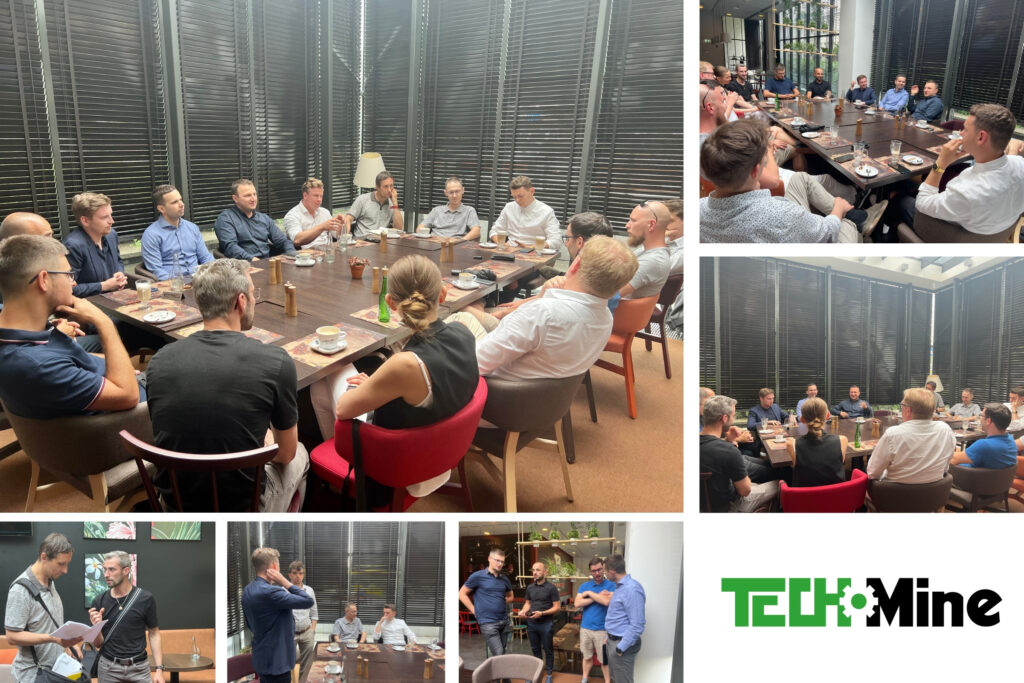
During the last meeting of entrepreneurs, we talked about overcoming barriers to company growth. After a short introduction by each of the participants and an introduction to the topic by the meeting’s organizer, Lukasz Zjawinski, an intensive discussion began. The participants shared their observations and together we came to the conclusion that currently the biggest growth barriers in running a company are:
- A lack of good employees on the market and strong market competition. Difficulty in hiring people with the right competencies, above all at the managerial level, where the employee is to take responsibility for specific areas of the company’s growth
- Revenue that is too low (too little sales), which slows down the building of structure and organization
- Personal limitations and beliefs of the people with a decisive influence on the company (most often the owners)
- Limited delegation of tasks to the team, the belief of some owners that if something is to be done well, they have to do it themselves
- Inability to enter new customer segments with their value proposition , slow organic growth based on referrals
- Lack of brand awareness among the target audience, and often also an inappropriately chosen target group
- No company mission and vision, or no communication of them within the company, so that employees do not know where the company is heading
- No processes and procedures
- Frequent changes in regulations, including tax regulations (legal instability)
- No plans, or no measurement and analysis of parameters during their implementation
One of the main conclusions of this meeting was that regardless of the industry, entrepreneurs tend to have similar challenges. Depending on the industry, the scale of operations or the stage of the company’s development, different ones are more or less painful. Those gathered also agreed that for some growth challenges even having a reserve of capital will not help. So what is needed is knowledge and a more strategic approach to scaling the company. Even a cursory capture of the growth challenges that still lie ahead of some companies makes it easier to open up to change and approach it more consciously. Below are a few more shared final conclusions:
- Business is based on people. You need to constantly communicate with the team so that they know your vision and goals. If you do not encourage employees to improve, propose solutions and admit mistakes, they will probably fight them, and consequently become a barrier to growth
- If you are not convinced of your product, you will have trouble selling it
- When a problem appears, take full responsibility for it. Shifting it onto employees only causes frustration and conflicts and solves nothing. Focus on solving problems, not multiplying them
- If everything is on your shoulders, you will not have time to run the company, and instead of working on the company you will be working in the company
- Without procedures, it will be hard to transfer responsibility and teach others how to fulfill their duties
- Even in a small company you can use solutions that work in larger organizations. Saying that “he can because he has a big company” is often an excuse
- Run the company with the thought that one day you will sell it (though if you do not want to, you will not)
- It is hard to learn from the successes of other companies. They are usually unique in character and many factors contributed to them. It is much better to learn from others’ mistakes, because they tend to be repeatable, so they can be avoided
- … and something we sometimes find hard to admit: the main barrier to a company’s growth is most often its owner.
 |
Would you like to learn more about scaling a company and the key ingredients of growth? Listen to episode #2 of the podcast Droga Przedsiebiorcy (in Polish) |
The experience of some entrepreneurs shows that it is possible to successfully delegate tasks and responsibility and not be involved in internal processes. This requires, however, conscious planning, predictable sales and the right attitude.
Finally, a handful of good advice the gathered entrepreneurs gave each other:
- Making changes to the product, the website and other things all at once, you will not see which change brought which results
- Promoting a high-quality product is something different from promoting a premium product
- Wrong assumptions tend to be the mother of “fuck-ups”
- When creating procedures, the team is usually against them, fearing that the small company is being turned into a “corporation”. After a while they get used to them and act for the good of the organization
- When calling a meeting in the company, always give an agenda, and at the end draw conclusions and delegate specific actions
- Crowdfunding, in the case of failed campaigns, is very dangerous for your image
- When the time comes, sell the company; otherwise your child will sell it for much less
- We do not run a company in order to work with people we do not like or who annoy us
- A manager’s goal is to deliver results; the secret is to deliver them even with an average team
- Admittedly things are not perfect in my company, but at least I can see that others do not have it easy either 😉
Do you see similar challenges in your company? Let’s talk.