
Strategic workshops on scaling B2B sales
A one-day workshop for the owner and senior management of a B2B technology or service company that wants to scale sales. The owner works through the business model and the market together with the key people in the company, and leaves with diagnosed constraints and strategic goals for sales.
TechMine is a consulting firm based in Katowice, Poland. Strategic workshops are run by a TechMine consultant: online, at our office in Katowice or at the client’s premises anywhere in Poland. At TechMine we call this service a strategic sales workshop, because it has one direction only: scaling sales.


- 1 day6 to 8 hours of work with the owner
- Up to 4-5 peopleowner and senior management
- Online, Katowice, on siteanywhere in Poland
- From PLN 6,000 netper workshop, not per person
What strategic workshops are
Most of the B2B companies we work with grew on the owner’s expertise, relationships and referrals. At some point the owner wants to grow faster, but lacks a full picture of where the company can get to and what is holding it back. One person sees a new segment, another sees salespeople, a third sees a new product, and the business partner sees something else again. A strategic workshop exists so that this picture becomes one, and so that it rests on facts about the company rather than on beliefs.
We work on your company: your clients, revenue, channels and costs. Not on examples from other industries.
This is not a training course. Nobody teaches the owner sales techniques or shows slides full of theory. There are no sign-ups, no calendar of dates for many companies and no price per person. The workshop involves one company, its owner with the decision-makers and a TechMine consultant who leads the conversation, keeps the structure and asks the questions nobody in the company asks themselves day to day.
The workshop is a one-off service. It ends with a completed business model template, a list of constraints and strategic goals. What the company does with them next is a separate decision for the owner.
Who strategic workshops are for, and who they are not for
Strategic workshops are for owners and senior management of technology and service B2B companies. First and foremost technology companies: software houses, implementation firms, integrators and producers of technical solutions. We work equally well with owners of B2B service companies: marketing agencies, HR firms, engineering and consulting firms, as well as manufacturers that sell complex solutions to other businesses.
The workshop makes sense if
- Your company is growing, but as the owner you don’t have a full picture of where it should grow next and with what
- Sales rely on your referrals and relationships, and you want to move to a predictable sales model
- You’re considering a new client segment, a new market or a change of business model and want to run the numbers before you spend money
- You plan to hire salespeople or a head of sales and first want to settle what they should sell and to whom
- You make growth decisions on gut feeling, without a set of facts about the company that your partners sign off on too
The workshop doesn’t make sense if
- You sell in e-commerce. It’s a different sales mechanism and not our area of expertise
- You’re a startup before product-market fit. First you need your first clients, not a scaling strategy
- You’re looking for confirmation of a decision that has already been made
- You need sales techniques training for salespeople. The workshop is for the owner and is about direction, not execution
- The direction is clear, but results aren’t growing. In that case a better start is a B2B sales audit
The owner and senior management, up to 4-5 people
A strategic workshop brings together the owner and senior management, meaning the people they make decisions about the company’s direction with: business partners, board members, the head of sales if the company has one. The small group is intentional. With five people you can work through the entire business model in one day and reach shared conclusions. With fifteen it ends up as a presentation.
This is not a workshop for the whole sales team. Salespeople execute the sales strategy, and the workshop exists so that the owner first understands what that strategy should be built on.
Where to start scaling sales
Scaling sales in a B2B company rarely starts with hiring salespeople or rolling out a new CRM. It starts with strategic decisions: who you sell to, what you don’t sell and why anyone should buy from you in particular. That is how we define a B2B sales strategy and that is what the first of the five pillars of the SalesMachine system looks like. Until those decisions are made, every salesperson and every tool just scales the chaos.
The thing is, a good strategy can’t be put together in a hurry, in one afternoon, from ideas thrown on the table. A sound strategy requires thinking through the business model, the environment, the competition and the team’s capabilities first. That is exactly the work for a workshop: a deep understanding of the company’s situation, a diagnosis of its constraints and a definition of strategic goals. The sales strategy that addresses those goals is built in the next step.
For a company that lives on referrals, scaling sales means moving from referral-based selling to a system: a repeatable way of winning clients that doesn’t depend on the owner’s network. Referrals give you a prospect, not a client, and you can’t increase them on demand. A predictable sales model isn’t created in the sales department. It comes from the owner’s decisions about what the company sells, to whom and how, and only then flows down to process, communication, tools and metrics.
The second starting point is the market. What in the company’s environment can accelerate sales growth and what will block it: trends in clients’ industries, technological change, shifting buying expectations, competitors’ moves. The owner usually knows all of this, but in pieces. The workshop puts those pieces together into one picture.
Scaling sales is part of the broader topic of scaling a company: operations, team, finance. We cover that in a separate article on how to scale a company. The workshop deals with what comes first in scaling a company, namely sales and the model it stands on.
Nine areas of the business model the owner works through
A template completed during the workshop, in the language of sales
On top of that, the market: opportunities and threats, trends, client expectations and technological change. Only against this background do we name the constraints and set strategic goals for sales.
How workshops for building a sales strategy run
The workshop is the first step towards a sales strategy: it doesn’t write the strategy, it gives it a foundation. Three stages: the introductory conversation, the workshop day and the wrap-up at the end of the day. It all fits into one working day plus an hour of conversation beforehand.
Introductory conversation with the owner, approx. 60 minutes
An initial diagnosis of the company’s situation: where clients come from, what sales look like today, what the owner sees as the problem and what goals they have. We outline problems and goals roughly, so that the workshop day starts with work, not with an introduction.
If you have already completed the sales maturity diagnosis (in Polish) online, its result is a good starting point for this conversation.
Workshop with the owner and decision-makers, 6 to 8 hours
We complete the business model template in nine areas: who the company sells to, what value it delivers, which channels it uses to reach clients, how it builds relationships, where its revenue comes from, what resources, activities and partners stand behind it and what it costs. Then the market: opportunities and threats, trends, client expectations, technological change.
Finally, the constraints that follow from all this, plus strategic goals and desired results, tested against the company’s real capabilities.
Wrap-up and next step
The owner leaves with a completed business model template, a list of constraints and strategic goals. The template is created during the session, so you don’t wait for a report.
The last part of the day is a conversation about what comes next: what the company will do on its own, and where it needs a sales strategy that addresses these goals.
The workshop day in four blocks
The order is fixed, the proportions depend on the company’s situation
- Block 1Starting situationWhat came out of the introductory conversation, what the owner and each person at the table expect, and where they differ.
- Block 2Business modelNine areas completed together, based on the company’s facts and figures. The longest part of the day.
- Block 3MarketOpportunities and threats, trends, client expectations, technological change. What will accelerate sales growth and what will block it.
- Block 4Constraints and goalsNaming the constraints that emerged from the two previous blocks, and strategic goals for sales, made realistic against the company’s capabilities. Agreeing the next step.
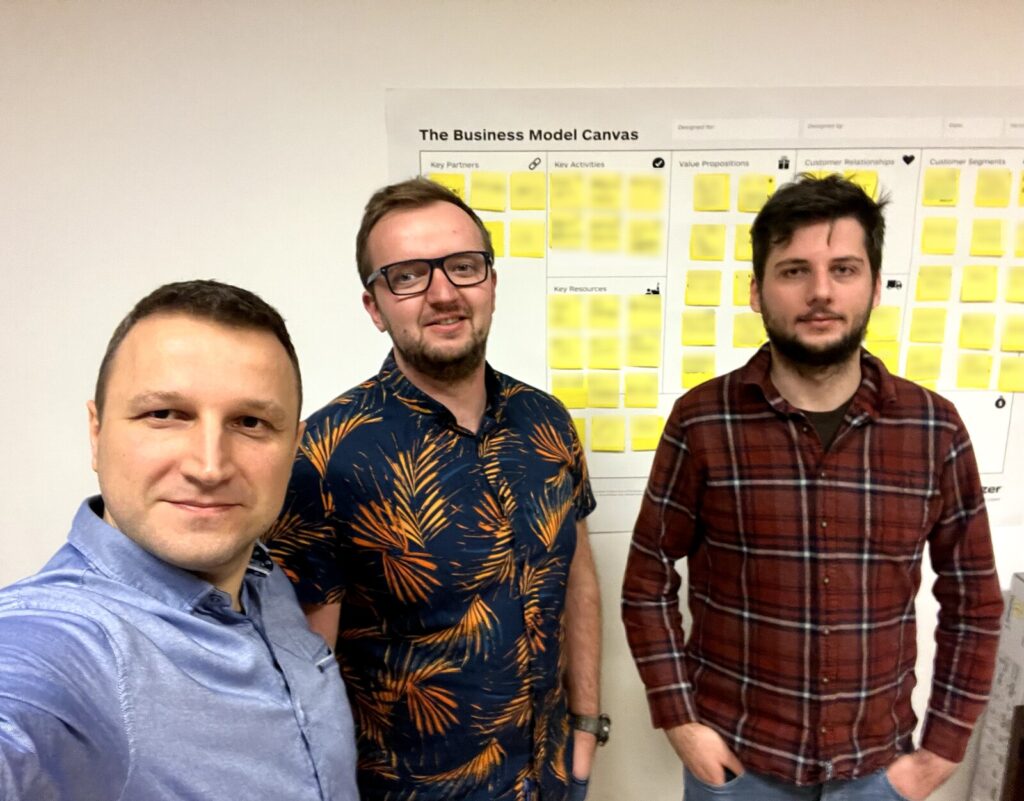
What the owner has after the workshop
What the owner walks out of the room or the video call with. Everything is created during the day, nothing arrives by post two weeks later.
- A completed business model template covering nine areasReady straight after the workshop, because we fill it in as we go. It is the first document in the company in which the owner and their partners sign off on the same description of who the company sells to, what it sells, how, and where it makes its money.
- Diagnosed constraints on the way to scaling salesNamed and organised: what blocks growth in the model, what in the market and what in sales itself. Without this, any strategy would be guesswork.
- Strategic goals and desired resultsNot “sell more”, but how much, in which segment, in what time frame and how you’ll know it’s working. These are what the sales strategy later addresses.
- Expectations made realistic against the company’s capabilitiesGoals tested against resources, skills and costs. Sometimes a goal gets bigger; more often its priority changes.
- One picture of the company shared by all decision-makersOne description of the company instead of three versions in three heads. For many owners this is the most valuable outcome of the whole day.
Strategic workshops or a sales audit
The workshop is a conceptual conversation. The audit examines how things actually look in day-to-day operations. They are two different services, not two stages of one, and a company rarely needs both at once.
| Strategic workshops | B2B sales audit | |
|---|---|---|
| What it is | A conceptual conversation with the owner about direction: business model, market, constraints, strategic goals | An examination of how sales really work: based on CRM data, call recordings, proposals and interviews |
| Question it answers | Where is the company now, what is holding it back and where do we want to scale sales? | Where exactly are sales losing clients and what should be fixed first? |
| Duration | 1 day, 6 to 8 hours, plus a 60-minute introductory conversation | 2 to 3 weeks |
| Who does the work | The owner and decision-makers with a TechMine consultant | A TechMine consultant working on company data, with the owner and salespeople taking part in interviews |
| Result | Completed business model template, constraints, strategic goals and desired results | Report with findings and evidence, maturity level across five areas, priorities |
| When to choose it | No full picture of the company, a change of business model, a new market or segment | The direction is set, but results aren’t growing, or are growing unpredictably |
Start with strategic workshops when
You don’t have a full picture of what is limiting the company’s growth and making it hard to scale. The company is changing its business model, entering a new market or a new segment. You plan to build a sales department and first want to establish whether you already have everything you need before you start spending money. In these situations an audit would examine a sales operation that may no longer exist six months from now.
Start with a sales audit when
The direction is clear and the partners agree on it, but results aren’t growing. There is a process, there are salespeople, there is a CRM, and yet forecasts don’t hold. Then the problem lies in execution, not in strategy, and it has to be found in the data. Details on the B2B sales audit page.
Where the workshops take place and how long they last
The workshop lasts one day, 6 to 8 hours, and is preceded by an introductory conversation with the owner of approx. 60 minutes. You choose the format; the scope and the result are the same.
Online
A video call and a shared whiteboard on which the business model template is created. A good format when partners work from different cities. We split the day with breaks to keep attention and focus.
Anywhere in Poland
At the TechMine office in Katowice
ul. Porcelanowa 60, Katowice. The owner leaves their own company for one day, which in itself helps to see the company from a distance.
Katowice, Silesia
On site
A TechMine consultant comes to the company’s premises. All it takes is a room where you can work and one day without day-to-day meetings.
Anywhere in Poland
How much strategic workshops cost
- Introductory conversation with the owner, approx. 60 minutes
- One workshop day, 6 to 8 hours, online, in Katowice or on site
- Completed business model template, constraints and goals, ready the same day
The price of a TechMine strategic workshop depends on how complex the company’s situation is. It ranges from PLN 6,000 to 12,000 net per workshop and covers all the work with the company, whether the owner sits at the table with one partner or with five people. We give a specific figure after the introductory conversation, because only then do we know how complex the company is. It is a one-off cost, with no package of hours and no commitment to further cooperation.
What determines where you fall in this range:
- 1
Number of segments and business linesA company with one segment and one offer takes a different amount of work than a company selling three different things to three different client groups.
- 2
Structural complexityOne company and one market, or several companies, several countries and several partners with different expectations.
- 3
Scope of preparationHow much material about the company the TechMine consultant analyses before the workshop, so that the day starts with understanding the situation rather than gathering facts.
How the workshops went at a marketing agency
I had the pleasure of working with Łukasz during a series of advisory workshops focused on developing the sales strategy at our agency. Thanks to his professional approach, we not only brought order to this area but also turned our sales activities into an effective process. His knowledge, experience and ability to explain things clearly made the whole process extremely valuable. If you are looking for an expert to help you build a well-thought-out and effective sales strategy, I highly recommend working with Łukasz!

Who we have run strategic workshops with
TechMine strategic workshops have been run with owners of technology and service B2B companies. The industries differ, yet the questions at the table are surprisingly similar.
- Software houses
- Marketing agencies
- HR firms
- Manufacturers
More reviews from company owners TechMine has worked with on sales and growth: reviews of working with TechMine and case studies.
Frequently asked questions about strategic workshops
Answers to the questions company owners ask before the first conversation. The full knowledge base of questions about B2B sales and company growth: TechMine FAQ.
One day, 6 to 8 hours of work with the owner and decision-makers, plus an introductory conversation of approx. 60 minutes with the owner a few days earlier. The business model template, constraints and goals are created during the workshop, so the result is ready the same day.
PLN 6,000 to 12,000 net per workshop, not per person. The price covers the introductory conversation, a day of work with the owner and senior management (up to 4-5 people) and the completed business model template. Where you fall in the range depends on how complex the company’s situation is: the number of segments and business lines, the company’s structure and the scope of preparation. We give a specific figure after the introductory conversation.
The workshop is invoiced separately and is not credited towards any later engagement.
With a completed business model template covering nine areas, diagnosed constraints on the way to scaling sales, and strategic goals and desired results made realistic against the company’s capabilities. We fill in the template during the day, so the owner has it straight away, without waiting for a report.
Plus one picture of the company shared by all decision-makers: a single description that the owner and their partners sign off on. The workshop doesn’t end with a finished sales strategy, because one can’t be put together reliably in a single day. It gives that strategy a foundation.
For the owner and senior management of a B2B technology or service company that already has clients and revenue and wants to scale sales. Most often these are companies with anywhere from a dozen to several dozen people: software houses, IT and implementation firms, integrators, marketing agencies, HR firms, engineering and consulting firms, manufacturers selling solutions to other businesses. What they have in common is the way they sell: a complex service or solution, a long cycle, several decision-makers on the client side.
The workshop makes sense in several situations. The company is growing, but the owner doesn’t have a full picture of where it should grow next and with what. Sales rely on the owner’s referrals and relationships, and the company wants to move to a predictable model. The owner is considering a new segment, a new market or a change of business model. Or they plan to hire salespeople or a head of sales and first want to know what they should sell and to whom. The common denominator: growth decisions are made on gut feeling, without a set of facts about the company that everyone at the table signs off on.
The workshop isn’t for the whole team or for salespeople, because it is about the company’s direction, not execution. We also don’t run it for e-commerce or for startups before product-market fit.
The owner and senior management, meaning the people they make decisions about the company’s direction with: business partners, board members, the head of sales, up to 4-5 people in total. The workshop isn’t for the whole sales team: salespeople execute the sales strategy, while the workshop gives the owner the foundation to build that strategy later.
The small group is intentional. With five people you can reach shared conclusions in one day; with fifteen it ends up as a presentation.
Yes. We run strategic workshops online, at the TechMine office in Katowice (ul. Porcelanowa 60) or at the client’s premises anywhere in Poland. Online, we work on a video call and a shared whiteboard on which the business model template is created. The scope and the result are the same whatever the format.
Training passes on general knowledge to a group of people, often from different companies. A strategic workshop is closed-door work by the owner of one company on its own business model, market, constraints and goals. There are no theory slides, no sign-ups and no price per person.
A strategic workshop has no sign-ups and no calendar of dates for many companies: the date, format and scope are agreed with one company. After a training course you’re left with a notebook; after a workshop you’re left with a completed business model template and the owner’s decisions.
With the workshop when the owner doesn’t have a full picture of the company and its constraints, or the company is changing its business model or entering a new market. With a B2B sales audit when the direction is clear but results aren’t growing: then the problem lies in execution and has to be found in the company’s data.
In short: the workshop is a conceptual conversation about the company’s situation and direction, while the audit examines how things look in day-to-day operations. For a service company that lives on referrals and is only now setting out to build sales, the workshop usually comes first.
Yes. We have run strategic workshops with owners of software houses, marketing agencies, HR firms and manufacturers. What matters is not the industry but the way the company sells: complex services or solutions sold to other businesses, a long cycle, several decision-makers on the client side.
We don’t work with e-commerce or with startups before product-market fit.
No. A strategic workshop is a one-off, self-contained service invoiced separately. Some owners carry on under their own steam afterwards.
If the owner wants to go further, the next step is a sales strategy that addresses the goals and constraints from the workshop, and then possibly building the complete SalesMachine sales system. That is a separate decision and a separate conversation.
Ask about a date for a strategic workshop
Leave your contact details and a TechMine consultant will get in touch to arrange the introductory conversation: approx. 60 minutes online, free of charge. After it you receive a proposed date, format and a specific price for the workshop. If a workshop isn’t what your company needs right now, we’ll tell you straight.
- We reply on working days, usually within 24 hours
- The introductory conversation is led by a consultant, not a salesperson
- The workshop usually takes place within 2 to 4 weeks of the conversation
Prefer another way? Email hello@techmine.pl, call +48 32 49 44 248 or book a free consultation if you’re not sure a workshop is the right first step.
On working days we usually get back to you within 24 hours by email or phone with a proposed date for the introductory conversation. We have also sent a confirmation to the email address you provided.
Want it sooner? Call +48 32 49 44 248. In the meantime you can check what stage sales are at in your company: free online diagnosis (in Polish), about 11 minutes.
One day, one picture of the company, before the strategy is built
Strategic workshops on scaling B2B sales: online, in Katowice or on site anywhere in Poland.
Prefer to check on your own first? Take the sales maturity diagnosis (in Polish): about 11 minutes online, results on screen straight away.